Search This Blog

Loading...

Sunday, September 25, 2011

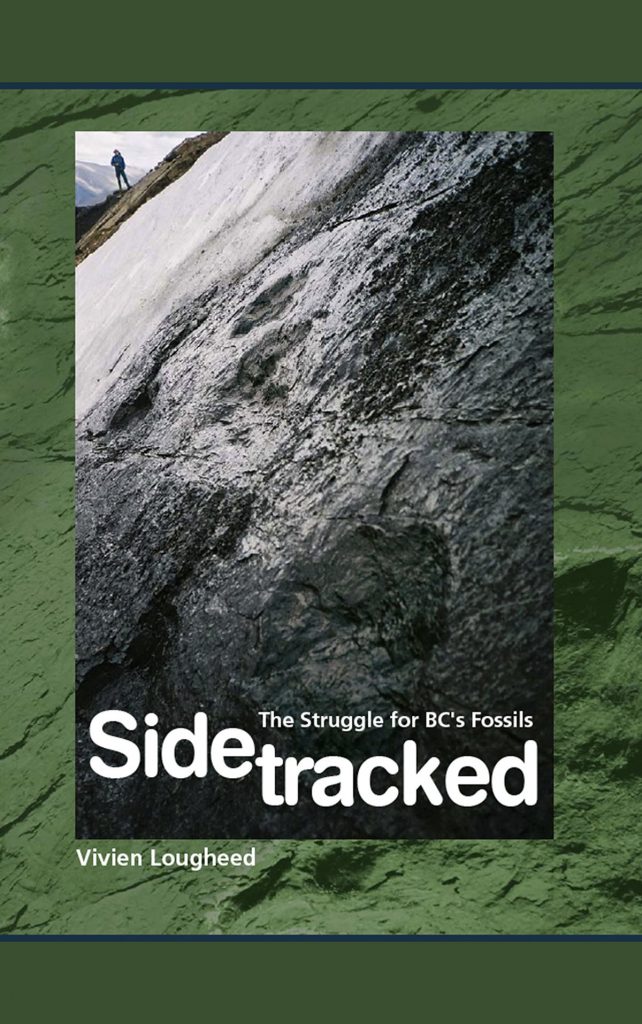
Sidetracked Launch


Jim Brinkman/Viv

I fretted and worried before the book went to print. Then as the date for the launch approached, I worried and fretted about it. All my friends and fans would gather to see what I’d been working on for the last few years. Some knew the characters and would be curious. Some knew the story and would want to see if I’d dug up anything new. Others would have an opinion on the topic. Whatever I said and showed had to satisfy them.

I sent e-mails to my friends and my friends sent e-mails to their friends. My e-mail box kept filling with messages as to why people couldn’t come. This made me nervous. But then, I figured, they were more likely to tell me that they were not coming than that they were.

The night arrived. The publishers, Lynn and Sheila were there. John was there. Nicole Larson, events coordinator for Books & Co were there. Including me, that made five. But it was raining. People hated going out in bad weather. I checked my watch.
Publisher Lynn & Garnet (hero of the book)

I made sure the slide projector was working properly and that none of the images were cut off. I made sure the coffee was hot and the wine was opened, the chairs were spaced. I kept losing things. First my book, then my script.

Everyone was relaxed but me. I’d commissioned John to take photos so he was busy practicing. He took pictures of Nicole who was adjusting the mic, fixing the coffee, stacking the books. He took pictures of Lynn and Sheila who were looking at the art display in the room. He took pictures of the pictures.
Paul, Kathy and Sheila

Then people began to trickle in. Glen Nicholson, the man responsible for my getting the story in the first place, took a chair in the front row. Harry Morrison, one of my favorite characters in the book but one I’d never met, introduced himself. He said I looked like a Vivien. Carolyn, a hiking buddy of mine, parked her bike beside the wine table. She’d raced through the rain to be on time. And my travel buddies, Bridget and Charlie, gave me hugs and kisses.
Bridget & Charlie (mom Pattie watching)

Finally there were 80 or 90 people present. Now I had that to worry about. My show better not fizzle in front of an army of characters in and buyers of my book. Also, I would be signing the copies they bought. I examined faces, many familiar. Not a clue what their names were. I ran over to John who was clicking away on the camera but he can barely remember the names of all his grandkids. Then he started naming people. Glen, Hilary, Donna, Garnet (the hero, he said), Pat, Brendan, Gail, Anne, Dave…. I walked away.

I took my place at the front and started the show. I fumbled and stuttered on lines. John forgot to advance the slides near the end. I had put him to sleep. I walked over and turned off the projector, thanked everyone for coming and answered a few questions.

Now the names — they came back, probably because the show was over and I was beginning to relax. Then my friend and neighbor came up with a book for me to sign. I’d known his mother. I had been a guide leader for his sisters. He’d built my deck, came over now and then for burgers and wine. I knew a few of his girl friends.

I sat, pen poised over the title page. He grinned with a knowing look leaned close to my ear.

“George,” he whispered.


Friday, September 16, 2011

MARRIAGE PROPOSAL


 John is an English professor, raised in Vancouver by loving and attentive parents who believed good manners were important and emotional displays were embarrassing. Onions, garlic and pastas were considered seditious and alcoholic drinks toxic. Entertainment included Gunsmoke, Ed Sullivan, and standing around a pump organ droning hymns. During his years at university John acquired a Harris Tweed jacket with leather elbow patches, smoked a pipe with perfumed tobacco and read Canadian literature. He married his high-school sweetheart, got a teaching job at a college in Prince George, and started raising a family. A wild party was one that survived until midnight.
John when I met him

I, on the other hand was a laboratory technologist who was raised in Winnipeg by emotional and demonstrative Slavs that kissed and hugged with the same exuberance they used when pounding their fists on the table over issues of importance, like whether wheat grew better under socialism or capitalism. Food was usually fried in pork fat, spiced with garlic and washed down with homemade hootch. Entertainment consisted of dancing to music played on a fiddle by a resident uncle or cousin and there was always time for a story about the old country.

I met John at the college where he taught. By that time, his wife had left him because his libido had broken loose with a redhead he'd met at a literary conference.  And, I too had been married and divorced; my husband had traded me, a granola sucking jock dressed in Gortex and leather boots, for a cute little deaf mute who baked cookies and knit socks.

"At last," he told my mother. "Some peace and quiet."

Because John is a leg-man and I had nice ones augmented by years of professional roller skating followed by more years of long-distance trekking, it didn't take much to get his attention.  We soon started having an affair. But I'm impulsive, and when things went badly at work I quit and booked a one-month ticket to Peru.  After some agonizing deliberation on John's part and assurances from me that espresso bars were big throughout the Inca Empire, he agreed to join me.

He got a passport and had inoculations for all possible diseases, some of which I had never even heard. If the nurse mentioned it, he wanted the shot or pill for it. By the time we were packed, his first aid kit contained three different types of tablets for malaria (just in case), some tablets for high-altitude sickness, some Gravol for motion sickness and some prophylactics  for dengue fever, encephalitis and Asian flu. Although I said nothing, I knew they were sugar pills since prophylactics for these diseases hadn't been discovered yet. His toilet paper supply took up more space in his pack than his clothes. 

What I never counted on was that John could make himself sick just by worrying, and we didn't have any pills for that. As the plane descended into Lima, he started hyperventilating. Friendly passengers advised him to breath deeply, to breath into a bag, to not breath at all. An Indian lady gave him some taco chips. John tried all the advice, ate the chips and developed a severe headache.

By the time we got to immigration, he was too sick to stand. We headed for the infirmary where the doctor decided that John was having a heart attack. As the doctor blew cigarette smoke into his face, John responded by puking the taco chips onto the doctor's tie. The nurse insisted that I should clean it up. John, shivering now, mumbled that the tie looked better. Ignoring the nurse, I wrapped my long johns around his head and my jacket around his shoulders. He was going into shock.

The nurse pushed us toward the back door to wait for an ambulance. Shock or not she didn't want him puking in her clean infirmary again. I carried my pack on my chest, his pack on my back and John on my arm. We waited. John puked again, this time over the railing and onto the alley. Finally, a 1948 Fargo panel truck with a red cross painted on the door arrived. As I pushed him onto the steel bunk in the back, he muttered, "Ya don't see many of these babies around anymore."

We zoomed through town with the siren blaring and horn honking at the intersections. All the while, the driver's assistant explained that the hospital was the best in the city and the most expensive, that he had his mother there before she died, that the cost of food was high, that he could exchange money for us. He hauled out a calculator but we couldn't agree on the exchange rate before we arrived at the hospital. John slept throughout the trip.
Busy Streets

Inside the emergency entrance John was placed in a wobbly wheel chair that had no rubber on the wheels and we were quickly escorted to a first-class ward that had twelve beds; all but one was occupied. Visitors were cooking meals on camp stoves set down beside the beds. Others were changing sheets or helping patients to the toilet. The rule of Latin American hospitals became instantly clear. The services provided are medical; the rest is done by friends and relatives.

But the medicine was first rate. The emergency doctor determined that John was having a mere panic attack and ordered some adrenalin, which a nurse administered with an old glass-style syringe that had  a sharpen-as-you-go needle. John was oblivious to it all, including my gasp as the needle went into his arm. I was too slow in my Spanish to tell them that we had a bundle of AIDs-free syringes in our packs.

The adrenalin worked. John moved and moaned, his eyes flicked open and shut, he licked his lips. Seeing that he was regaining consciousness, I busied myself with the necessities of acquiring Peruvian money.  John awoke to the doctor's calculator and a huge pile of money stacked on his chest. After the transaction, a few words and a handshake, we bid the doctor goodbye and started for the door. The bill,, we were informed by the nurse, would be paid by the airline company.

As we walked down the street looking for a place to stay, I noticed that John had color in his face and was walking with determination in his step. He was also congratulating himself on getting us a free ride into Lima. This, I thought, was a good sign. He had some of the makings of a traveler.

The next day we flew to Cusco. From there we hoped to catch a train to the start of the Inca Trail where we would hike for four days past ancient shrines and ruins and over high mountain passes to the historical city of Machu Picchu.

In our Cusco hotel room John took some pills for altitude sickness while I tucked all my camera gear into his daypack and our passports and money into our money belts.  We headed to the plaza for dinner. There, I enjoyed a meal of stir-fried organ meats while he had an egg sandwich although he did taste a bit of my dinner. Another promising sign. As we sipped our beer we heard a loud knock on the window behind us. We turned to see what the person wanted. He knocked and pointed and knocked some more.
Cusco seemed safe

"The guy's nuts," John said and ordered a second beer. As he went to grab his pack to get his change purse he discovered that the pack was gone along with the camera equipment. This depressed both of us. John no longer felt so good about saving us the $20 taxi-fare into Lima. The camera equipment was worth more than $3000.

The following day we replaced the camera with a little point-and-shoot, purchased hiking food and obtained tickets for the train to the trailhead. Like visions of sugarplums at Christmas time, John could see VIA Rail dome cars passing through the Canadian Rockies. When we boarded, he was pleased with our reserved seats on a comfortable coach that had a toilet at one end.

By the time we traveled 50 kilometers, however, the train was packed full of locals, some sitting, some standing, some even standing and sleeping. The isles were jammed with sacks of vegetables and corn. The women shared empanadas, children cried, chickens clucked and a lamb bleated for its mother. I clung to my backpack like it was my oxygen supply. Occasionally I glanced at John as he looked out the window ostrich style, trying hard to ignore what was happening around him. By the time we were near trailhead, I realized that there was no way to get to the exit so I made an alternate plan. When the train stopped, I jumped up, slid the window open, grabbed John's pack and waved my hand for him to climb out the window. Everything happened so quickly that we were both on the ground with packs on our backs before he could protest.

John was proud. "That's one hell of a long way to jump!" he said, adjusting his pack. I could see that he was happy as he started walking toward the trailhead.

We had sunny days for walking and cool nights for sleeping. John began to relax. He even managed to speak to a few locals.  He also noticed the paved Inca Roads and stone baths. The final evening was especially pleasant. We could hear birds singing and smell frangipani in the air. We camped near an old Inca sentry post that had huge stones ground together to fit like a jig saw puzzle. We took photos.

Just as we were finishing our supper, three police officers with automatic rifles slung over their shoulders, sauntered  up to us.

"Estamos Officiales," said one, flashing an official card at us.

"Passaporte." the second one said. They were both polite. They glanced at me but, being macho, directed their enquiries at John.

After John pulled out his passport, they clustered around him, peering from his passport picture to his face, muttering questions that he was unable to answer. I slipped back a few steps to take a photo. The click of the shutter brought the muzzle of one officer's rifle to rest on John's temple. The cold metal made John's hands shoot up above his head.

"Yo soy Canadiansays, yo soy Canadiansays," he cried as if this would explain that since he was a Canadian he was not a criminal or terrorist.

"Control your woman!" the officer commanded. "No photos!"

John, not understanding, nodded. I tucked the camera into my pack and apologized in Spanish. One officer nodded at me and shouldered his rifle,  while the other returned John's  passport. They moved off into the scrub beyond the creek and disappeared.

"Geez," I said once they were out of sight. "I'm glad they didn't take the film."

The next morning, John took the lead. We were up early and at Machu Picchu before noon. After a brief look at the ruins and a quick dip in the hot springs, we headed for the train station and back to Cusco. We knew we had enough time to catch the late flight back to Lima. From there, I thought, we'd go down to Chile.

As we walked toward the exit at the Lima airport, John stopped and smiled. "Can I buy you a glass of wine, honey?"  I grinned back and we headed for the lounge.

Once the wine arrived, he sat back and said," If you get our tickets changed so we can go home today, I'll marry you."

After a few moments of thought, I did and eventually, he did and we went to Guatemala for a honeymoon. He's been trying to control me ever since.
John in Montreal talking about Shakespeare where he is far more comfy than in Peru


Tuesday, September 6, 2011

KAKWA'S RECENT HISTORY


Anthropological evidence indicates that people resided around Jasper National Park, just a few kilometers east of Kakwa, as far back as 10,000 years ago and it is reasonable to assume they traveled and traded as far west as Kakwa. Supporting this theory is an archeological site with house depressions, cache pits and gravesites, located in the Yellowhead corridor, at the west end of which is now the town of McBride.

Ed Jarvis first explored Kakwa in 1875. Jarvis Lake, one of two possible floatplane landing spots in the park, was named in his honor. He traveled through Kakwa in late February with Major C.F. Hanington looking for a railway route. 
Jarvis and Hanington had come by dogsled from Quesnel, through Prince George and then up the Fraser River to Hedrick Creek on the north side of the park. The country was and still is raw and empty. Jarvis and Hanington noted that the mid-winter days bestowed barely eight hours of daylight and temperatures often fell into the minus fifty range. Due to the steepness of the mountains, the ruggedness of the terrain and the harshness of the climate, it took Jarvis just this one trip to discredit the area as a possible rail route.

Taking the advice of Jarvis, the Grand Trunk Pacific Railway chose the more southerly Yellowhead corridor for its western route to the Pacific, leaving Kakwa wild and unexplored. Incorporated in 1903, the rail line ran from Winnipeg through Edmonton to Jasper and by 1914 west to McBride and Prince George and finally on toward Prince Rupert. Adventurers rode the Grand Trunk by the thousands and some, wanting more excitement than what the eastern Rocky Mountains had to offer, joined horse packing and hunting trips into Kakwa.
                                                              Too tough for a rail line
                                                                              Photo by Wayne Giles
Along with explorers and big game hunters came the mountain climbers, enthralled with Mt Sir Alexander, looming at 3270 meters (10,728 ft) and Mt Ida just a few feet lower. Mary Jobe, an American schoolteacher/mountaineer and Donald Curly Phillips, a mountain guide from Jasper, were the first to be lured onto the foreboding peaks. They attempted to ascend Mt Sir Alexander in 1914 and then again in 1915 when Phillips came within 30 meters of the summit. Declared non climbable in 1922 by Curly, the mountain remained unconquered until 1929 when American climber, Dr Andrew Gilmour, managed to summit. Curly's greatest claim to fame didn't include Kakwa. He built the first recreational hiking trail to Berg Lake on Mount Robson, located between Kakwa and Jasper.  In the course of building the trail, Curly also mapped the first climbing route up the massif — the highest peak in the BC Rockies.

Probably due to lack of money during the depression and lack of interest during World War II, Mt Ida was left undefeated until members of the Harvard Mountaineering Club reached the summit in the 1950s.
                                                      Adventurous hikers
                                                                      Photo by Wayne Giles
Besides the early hunters and mountaineers, adventuresome pioneers and homesteaders poured into the surrounding valleys. One such pioneer was George Monroe, believed to be a descendent of James Monroe, the fifth president of the United States. He is also an ancestor of Bryan Monroe, Garnet Fraser's hunting partner who first saw the wall with the dinosaur prints and trackways in Kakwa in 2000.

The Monroe family broke ground in the Robson Valley west of present day McBride at Tumbledick Creek, just a few years after the rail line was completed between Mount Robson and Prince George. Everett, Bryan Monroe's father, was born at Tumbledick homestead in 1917 and as an adult took big-game hunting parties on horseback into the Kakwa area.

Another pioneer, Art Sherman homesteaded at Sherman Meadows in the northeast corner of the park. Sherman and his family arrived shortly after the Monroes landed at Tumbledick Creek. Once settled in, the Shermans poked around and found graves near their homestead, dating to the early 1800s. David Schenk, one of the Park's first rangers, remembers the gravesites and confirmed the early dates. During those days, the Kakwa River, located south of Sherman Meadows, was known as the Porcupine River. Kakwa, in Cree, means porcupine.

During one of Everett Monroe's hunting trips, he noticed an abundance of quartzite near Babette Lake, just west of Kakwa Lake. By the 1970s, a quartzite quarry was developed and a few years later, a mine was opened above Babette Lake.

The 1960s and early 70s also saw gas and oil exploration plus clear-cut logging in Kakwa. Along with the oil exploration came a deeper understanding of local rock formations, their ages and their histories.

When logging started, roads were built and the new roads offered easier access for hunting and recreational use. It was in the mid 1970s that Cambridge-educated environmentalist Ken Farquharson was flying from Tumbler Ridge to McBride, looking for possible coal mining areas. He saw the magnificence of Kakwa, crowned with the two ice-covered peaks of Mt Alexander and Mt Ida and he lobbied for protection of the area. It fell under recreational status in March 1987 and attained full park status in June 1999.

Today, many recreationalists and a few hunters are drawn to Kakwa. Hunting is what led Bryan Monroe and Garnet Fraser into their adventure.

Friday, September 2, 2011

WRITING TO READ

The president of the Federation of BC Writers, Craig Spence, was in Prince George last Wednesday to meet Fed members, to promote the benefits of the Feds and to socialize. I had little to do with the promotional part of his visit but I enthusiastically partook in the social aspect, which centered around a reading.
Craig Spence, President of the Federation of BC Writers

 Craig contacted Nicole Larson, the new events coordinator at Books & Co, which is the local hangout for anyone with the remotest interest in books, coffee, food, magazines, music, visual art, gossip and/or writing. Nicole agreed to give us publicity, which would result in an audience and she also agreed to be the MC for the evening.
Nicole Larson, Events Coordinator at Books & Co.

After an enthusiastic introduction by Nicole, the show was on. I was first to read simply because I am a Fed member and I just that day, had received my latest book, Sidetracked. Other Fed members who were present audibly sighed in relief over the arrival of my book simply because they would no longer have to listen to me groaning and moaning about my abstruse research, my husband John’s editing practices and my own frustrations when what I thought was clear one day turned out to be gibberish the next.

Paul Strickland, former Citizen reporter and now budding satirist, read next. He kept the crowd chuckling and giggling during his entire presentation. Jackie Baldwin wooed the listeners to a standing ovation and was forced to read beyond her pre-instructed “short” presentation. Then came our famous mystery writer, Joylene Butler with her new thriller — and thrill she did. There was not a sound in the audience as people waited to hear each captivating sentence.
Captivated Audience!

Craig read last from previously published work even though it was promised in Books & Co’s weekly announcements, that he would read a travel story about his trip up to Prince George.

I have inside information as to why he changed his mind. Like all writers, we write the Word of God during our first sitting. Craig did this too but as he explained to the audience, after a good night’s sleep God’s words read like twaddle. He wisely chose to read something well worked over.

It was a good lesson, one even those of us with a number of publications to our credit need to remember.

DINO SEX

A visitor to this blog wanted to know (or his grandmother did!) how dinosaurs got babies. I have to say I know nothing about this. Sidetracked deals with controversies about how fossils should be collected, not how they reveal the lives of dinosaurs. But I checked around.

Since reproductive organs are made of soft tissue, there is little possibility of this tissue being preserved, except in very rare cases and under special circumstances. So figuring out their method of exchanging genetic material through sex is difficult.

Dino's Love Nest

We know for sure that they did have sex though. We have found eggs and even a few eggs with fetuses in them. The fetuses had both XX (male) and XY (female) chromosomes.

What scientists do to come to some of these conclusions is reconstruct what is known about extinct species and fit that in with what we know about present species that may be connected through evolution.

These dinosaurs left their prints behind

For example, scientists believe that theropods are related to both birds and early crocodile species so they hypothesize that theropods have some of the features of birds and crocs.

They know for sure that both male crocodiles and some male bird species produce sperm in their testes only during the reproductive period, once a year. The organ that releases the sperm is also used to excrete all body waste. That organ, which functions the same in both males and females, is called a cloaca. Some birds, crocodiles and dinosaurs reproduce by cloacal kissing. In other words, there is no music, no soft light, just a quick pause at the opening like a kiss you might be forced to give your drooling old uncle. This cloacal kissing would be done only at mating time with the results being fertilized eggs in the female.

Female dinosaurs however, are a bit different than birds and crocodiles. Birds have only one ovary where they produce eggs while dinosaurs lay eggs in pairs from matching ovaries. They know this for sure because they have found paired eggs in dino nests. After some weeks of females attending to their eggs (this is an assumption because that is what crocs and birds do today) the eggs hatch.

Did males beat off other males for control of a harem? Did sexual problems (impotency, frigidity) lead to extinction? Did size become a problem with the larger species? Some used their tail for balance. Did the tail become an impediment? There are lots of professional papers about this but whether something exists that we laypersons can understand is unknown to me. Maybe some innovative artist somewhere has produced a pornographic diorama!